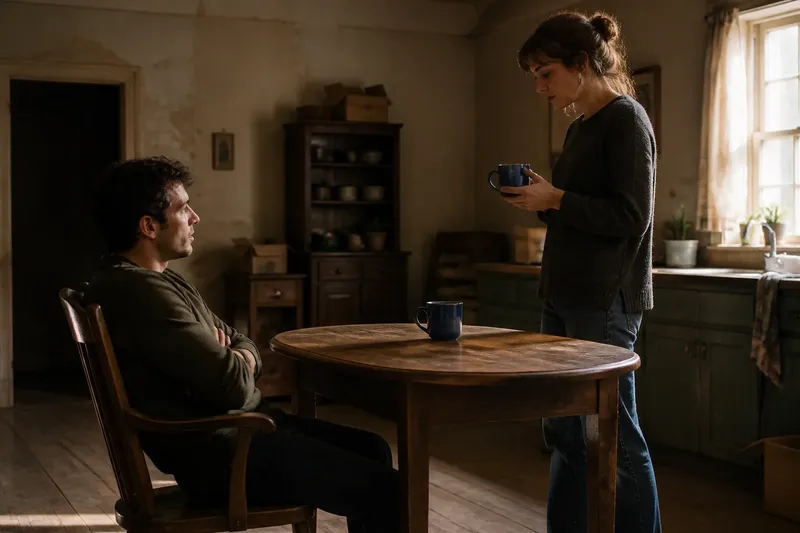
The Natural Performance Myth: Why Every Gesture Is a Choice
Natural performance grows from playable choices. Learn how to make gestures serve a character’s immediate goal and keep each moment clear and responsive.
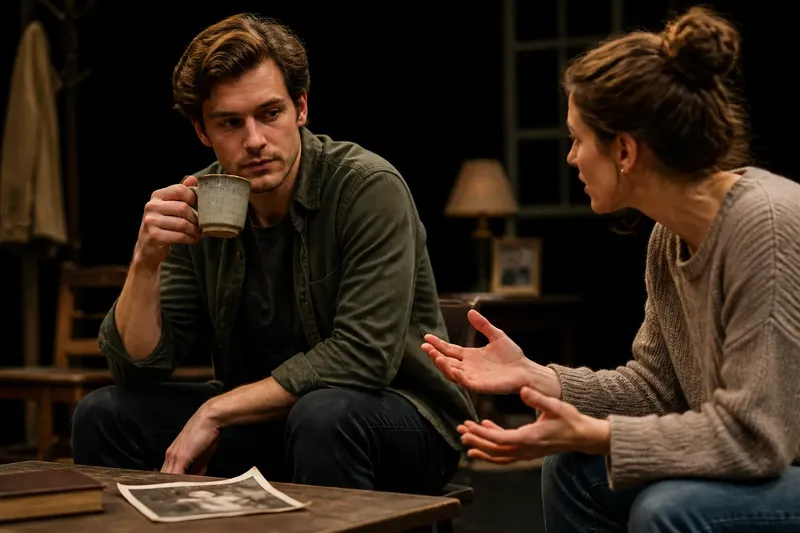
An actor reaches for a cup, pauses, then takes a drink while another character speaks. The cup is not the point; the actor’s shifting attention is. Natural performance comes from choices that belong to the scene, not from adding motion to make a character seem lifelike.
That distinction matters in rehearsal. A gesture can clarify a relationship, distract from it, or do nothing at all. Start with what the character wants, then decide whether a physical action helps pursue it.
Natural performance starts with an active objective
Before adding business, identify what your character is trying to get from the person in front of them. Keep the answer specific and active: reassure a sibling, stall a guest, draw out a confession, or end a conversation without appearing rude. “Be upset” describes a condition, not something an actor can pursue.
Connect that objective to the obstacle. A character may want to reassure a sibling while suspecting that the sibling is hiding something. The actor can offer comfort and watch for a response at the same time. The words and physical choices need not match neatly, but they should belong to the same conflict.
Write the objective as a short verb-led phrase. If you cannot imagine trying it with another person, make it more concrete.
Make physical behavior answer to the scene
Look at the practical circumstances. Is the character getting ready to leave, keeping a guest comfortable, concealing a mistake, or completing a task during a difficult conversation? A task can give the scene texture, but it should not be added merely to fill a gap. It needs a reason rooted in the character’s situation.
Say you are playing someone who wants a friend not to notice a damaged photograph on the table. The friend asks a direct question. You straighten the photograph’s curled edge while answering, delaying eye contact. The friend notices your attention shift and presses the question. The action has changed the exchange, so it earns its place.
Keep behavior manageable and specific. A chain of unrelated movements can make a character look busy without making the conflict easier to read.
Let gestures mark a change in intention
A sentence ending does not require a hand movement, and a difficult line does not automatically call for a look away. A gesture is more useful when it marks a decision: the character changes tactics, conceals a response, or chooses to approach a problem directly.
Try a passage with no assigned gestures. Focus on the scene partner and the objective. Then run it again, adding only actions that alter the tactic or make a decision legible. Keep the movement if it sharpens the character’s pursuit; remove it if it only decorates the line.
In rehearsal notes, record the intention rather than a motion tied to a particular word. “Conceal the photograph” leaves room for responsive acting; “touch the corner on this exact line” can become mechanical unless the staging requires that cue.
Use listening to revise the tactic
Acting choices can change when a scene partner’s delivery changes the meaning of a moment. Listen for emphasis, hesitation, breath, and shifts in focus. These details may prompt a new tactic without changing the character’s larger objective. A character prepared to joke, for instance, might drop the joke after hearing a reply that sounds more vulnerable than expected.
In rehearsal, agree on the scene’s basic circumstances while leaving room for variation in timing and emphasis. Your job is not to imitate every variation. Notice what it changes for your character, then respond with a clear choice. A softer reply might invite a closer approach; a sharper one might make the character defend a boundary.
Choose one exchange and name the information you need to hear before changing tactics.
Keep repeated performances clear and flexible
A staged performance needs to be repeatable enough for blocking, cues, and other performers, while leaving the actor connected to the exchange. Preserve the purpose of an action rather than every incidental detail. A coat used to evade a question can be handled slightly differently, provided the evasion remains clear and the movement fits the staging.
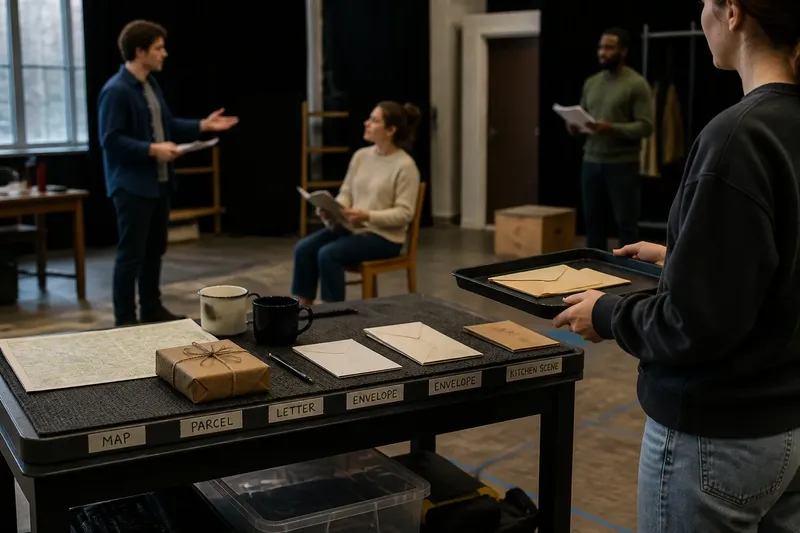
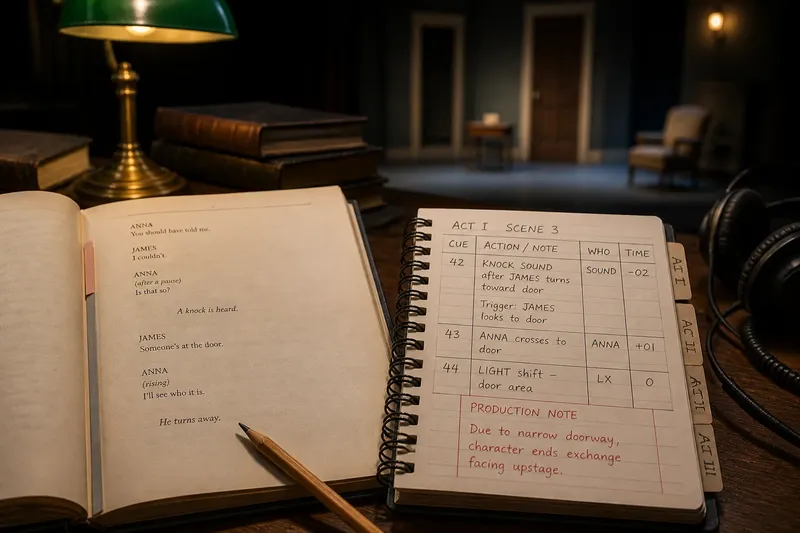
After a run, ask whether the shift in the relationship was understandable. If it was not, adjust the action or its timing before adding another gesture. When an action intersects with a lighting cue, furniture, or a shared physical sequence, agree on the necessary details with the director and production team.
For a quick rehearsal review, check each choice and decide what to change:
- Observe whether the objective is phrased as something the character can do to another person; if it is only an emotion, then rewrite it as an action such as “reassure” or “stall”; otherwise, keep it.
- Observe whether the physical task grows from the scene’s circumstances; if it has no connection to the conflict, then remove it; otherwise, retain it and name its purpose.
- Observe whether a gesture marks a decision or tactic change; if it only lands at the end of a sentence, then try the passage without it; otherwise, keep it tied to the character’s intention.
- Observe whether you can identify a specific cue from the scene partner that would alter your response; if no cue is clear, then listen again for a change in emphasis or focus; otherwise, let that cue shape the next action.
- Observe whether the action remains clear from the audience’s viewpoint; if it is obscured by furniture or another performer, then adjust its placement with the director; otherwise, leave the staging as agreed.
- Observe whether a necessary cue depends on exact timing or a shared movement; if it does, then coordinate and repeat that detail with the team; otherwise, preserve the intention while allowing incidental details to vary.
What do actors ask about natural performance?
Does natural acting mean using less technique?
No. Technique helps an actor focus attention, shape a playable action, and repeat it clearly. The craft can remain unobtrusive when each choice fits the scene.
Should I plan every gesture before rehearsal?
Plan the objective and the actions that may help pursue it, but stay responsive to the scene partner. Overplanning small movements can draw attention away from the exchange.
How can I keep a gesture from feeling false?
Ask whether it serves the immediate objective and fits the character’s circumstances. If it does neither, remove it; if it serves the scene but feels forced, adjust its scale, timing, or target.
How do I repeat a performance without making it mechanical?
Keep the blocking and cues that the production depends on, while allowing attention to respond to the partner. The action can be consistent in purpose without being identical in every incidental detail.
Work through a focused rehearsal pass
Imagine a scene in which a character wants to stop a houseguest from leaving before an apology. The guest stands beside a coat and says the visit is over. The actor can work through the passage this way:
- Set the objective as “persuade the guest to stay long enough to hear me.”
- Name the obstacle: the guest believes the apology will be another excuse.
- Keep the coat as the scene’s practical focus rather than inventing an unrelated task.
- Run the exchange while listening for whether the guest’s attention remains on the door or returns to the actor.
- If the guest reaches for the coat, make one direct appeal; if the guest turns back, stop pressing and give the apology plainly.
- After the run, check whether the change from persuasion to direct apology was clear. If it was not, adjust the timing of the appeal rather than adding extra gestures.
The resulting choice is specific: the actor does not play a general wish to seem sincere, but tries to keep the guest present, then changes tactics when the guest moves to leave. Natural performance becomes easier to follow when every action has a source in the scene and a consequence for what happens next.
For natural performance, keep the objective, the action, and the partner’s response connected. That gives the actor a firm structure without requiring every small movement to be fixed in advance.